

I Clipped a Liter of Water to My Pack. Was It Actually Better?
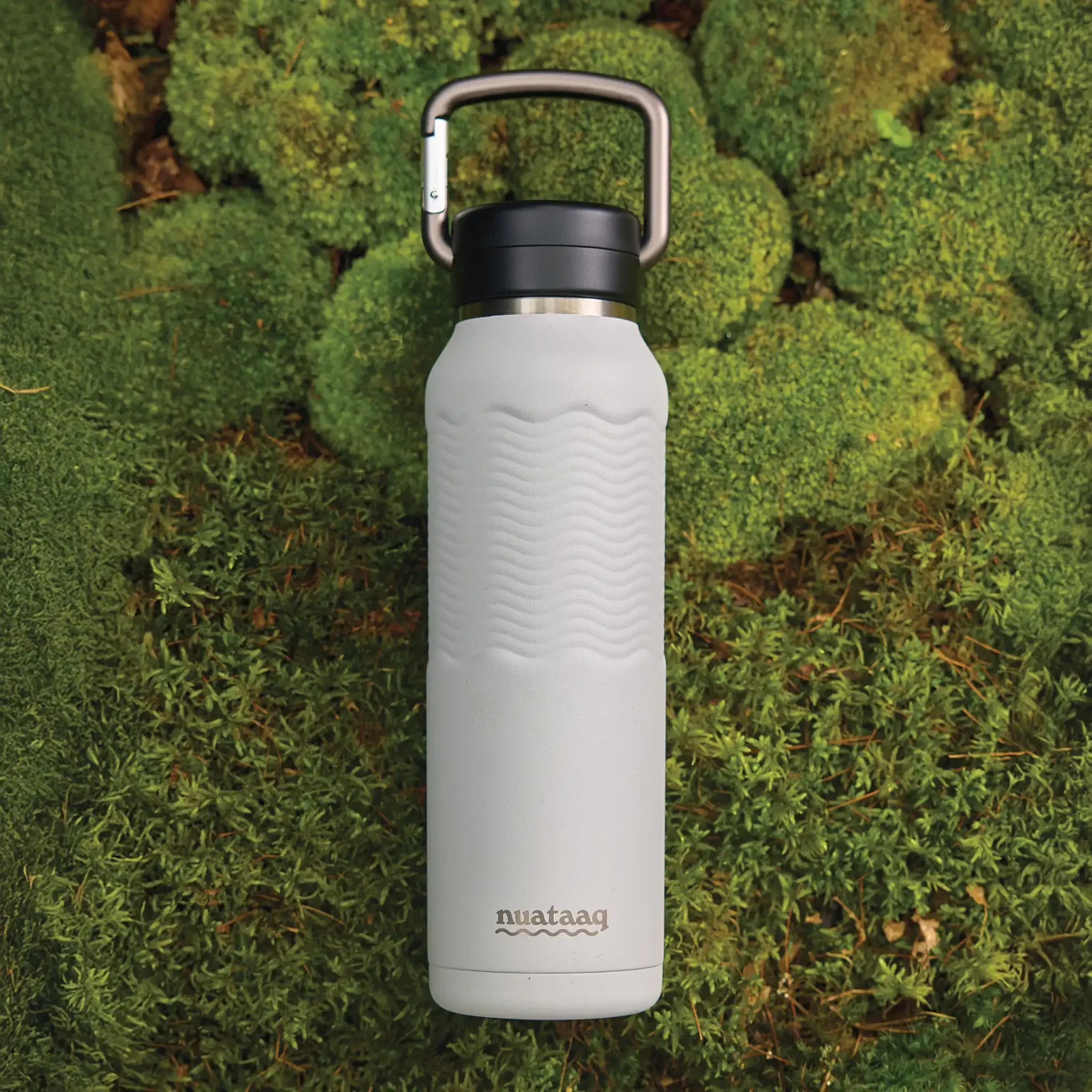
There are plenty of insulated water bottles that keep water cold. At this point, that is almost the minimum requirement. The more interesting question is whether a bottle actually solves any of the smaller problems that show up once you leave the house with it.
That is what caught my attention about the Nuataaq 34-ounce bottle.
I had the opportunity to talk with Nuataaq’s founder, and what became clear very quickly was how much thought went into the individual details. This does not feel like someone selected an existing bottle, added a logo and called it outdoor gear. There is a lot of problem-solving happening here, beginning with the most obvious feature: the integrated carabiner.
The Carabiner Is More Than a Gimmick
Most bottles give you some kind of loop, strap or plastic handle. Then, if you actually want to attach the bottle to something, you add your own carabiner.
That works until the strap stretches, the silicone tears or a plastic component breaks.
Nuataaq approached the problem differently. Its patented design integrates a forged-aluminum carabiner directly into the cap. More importantly, the handle does not simply flop around when you are walking. It feels like part of the bottle rather than an accessory attached afterward.
That distinction matters.
Clipping a liter of water to the outside of a backpack will not always be preferable to sliding it into a bottle pocket. Water is heavy, and where you carry that weight matters. But there are plenty of situations where having the option is valuable. A bottle pocket may already be occupied. You might be using a daypack without large side pockets. Around camp, the bottle can be clipped somewhere accessible instead of constantly being set on the ground.
The real benefit is flexibility. I do not have to add another component to make the bottle work the way I want it to.
They Even Thought About the Cap
One of my favorite details is something most people probably will not notice.
Nuataaq insulated the cap.
That seems obvious once someone points it out, but it is also an area where manufacturers can reduce cost. You can build an impressive double-wall stainless-steel bottle and still create a weak point at the top where outside temperature can more easily influence what is inside.
Nuataaq looked at the purpose of an insulated bottle and followed the problem all the way through.
In my use so far, the bottle has done exactly what I want an insulated bottle to do: keep my water cold. Nuataaq claims up to 40 hours of cold retention, 20 hours hot and five days of ice retention. I am less interested in recreating a laboratory test than I am in whether I can reach for the bottle later and still get genuinely cold water. So far, I can.
The Details Continue Down the Bottle
The exterior is equally considered.
The powder-coated finish has enough texture to feel secure without becoming excessively rough or tactical. It gives the bottle a sophisticated matte appearance while still feeling like something meant to get dirty.
About halfway up the bottle, Nuataaq incorporates another patented feature: its wave grip.
The pattern creates additional texture exactly where your hand naturally grabs the bottle. It improves grip, particularly when your hands or the bottle are wet, but it also becomes a subtle piece of brand identity. It is functional design doing two jobs at once, which is something I appreciate as a designer.
Even the branding is restrained. The laser-etched logo near the bottom feels intentional rather than decorative. Nothing is screaming for attention.
The wide-mouth opening is another practical choice. It makes adding ice easier and simplifies cleaning, two things that become increasingly important with a bottle you actually intend to use outdoors instead of leave sitting on a desk.
One Liter Feels Like the Right Size
At 34 ounces, the bottle is essentially carrying a liter of water. I like that capacity.
It is enough water to feel useful on a hike, during travel or around camp without moving into the enormous bottle category. Obviously, a liter of water weighs a little over two pounds before accounting for the bottle itself, so clipping it to a pack changes how that weight moves. Depending on the pack and where you attach it, a bottle pocket may still be the more stable option.
That does not make the carabiner unnecessary. It simply means it is another carrying option rather than the only way the bottle should be used.
Nuataaq also makes a single-wall titanium version, which opens up a completely different use case. Unlike the double-wall insulated bottle, the titanium version can be used for heating or cooking on an appropriate camp stove setup. I would never put the insulated double-wall version over a flame.
Would I Bring It Again?
Absolutely.
What I like most about the Nuataaq bottle is not any single feature. It is the accumulation of thoughtful decisions.
The carabiner solves a real carrying problem. The insulated cap addresses a weak point most people never think about. The wave grip improves handling while creating a recognizable design language. The powder coating feels durable without being overly aggressive. The wide mouth makes the bottle easier to live with.
It is rugged, but it is also refined.
There are cheaper insulated bottles, and there are certainly simpler ones. But after using the Nuataaq and talking with the person behind it, I understand why it is designed the way it is.
That may be the best compliment I can give a piece of gear.
Nothing feels accidental.
